
Ministry of Defence

Lest We Forget

The Royal British Legion
| Ministry of Defence |
Lest We Forget |
The Royal British Legion |
| |
|||||||||||||||||||||||||||||||||||||||||||||||
 |
Photographs
Copyright © Janet Few 2017 |
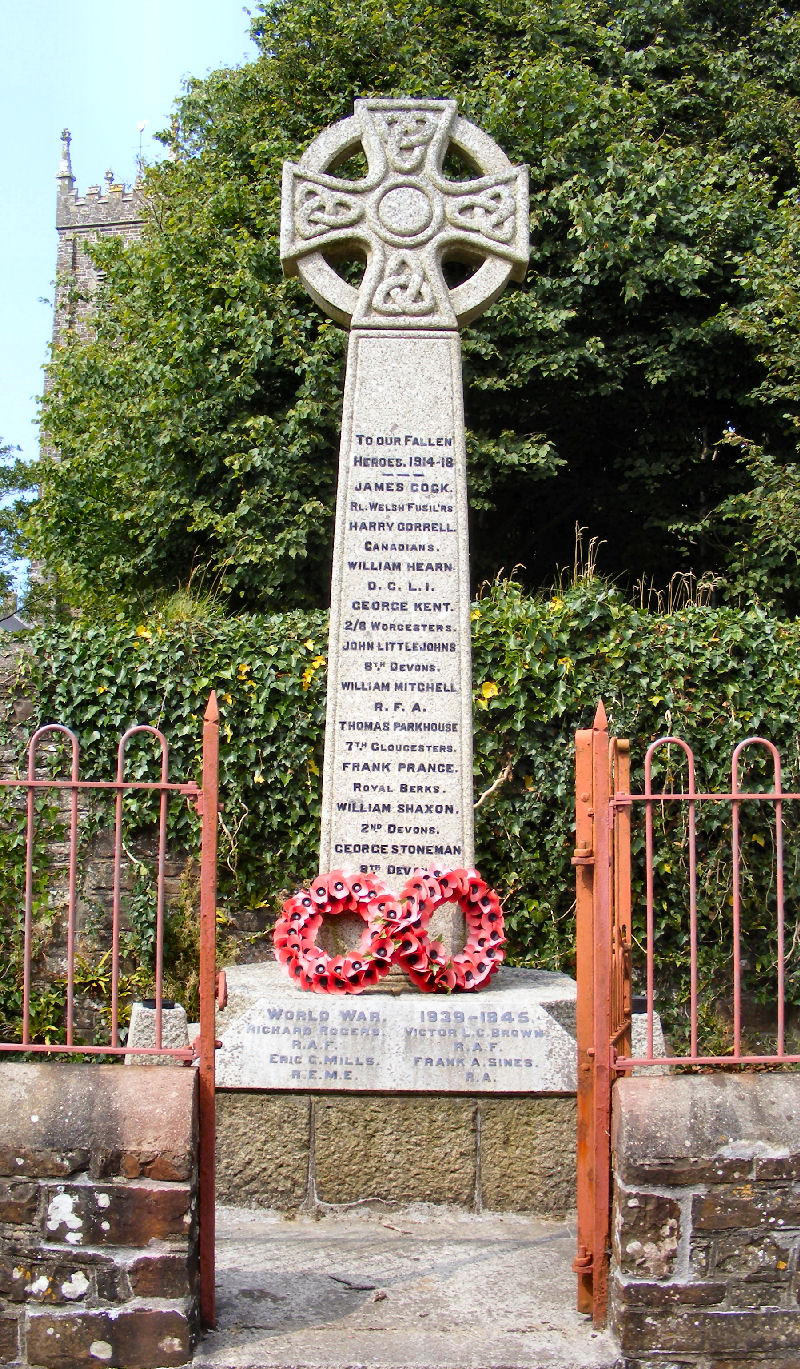
TO OUR FALLEN
HEROES 1914 - 18
| COCK | James |
On 23 November 1915 he volunteered to join the army under the Derby scheme. After his training in the Somerset Light Infantry at Blandford, he was transferred to the Royal Welsh Fusiliers and after a further course of training at Litherland Camp Liverpool, he was sent to France where he did active service on the Somme. In November 1916 he was sent home to Devonport hospital suffering from trench feet. After some time in the hospital he went to convalesce on a farm in Cheshire and he also worked with his father at Gorwood prior to his leaving for France again. The objective was to capture Cambrai and the railway station which was a vital link, bringing in supplies to support the German front line. The proposed method of assault was new, with no preliminary artillery bombardment. Instead, over 470 tanks would be used to break though the German wire, thus allowing the infantry to follow under the cover of smoke barrages. The attack began in the early morning of 20 November 1917 and the initial advances were remarkable, in some places the Germans were pushed back 4 to 5 miles, unheard of by WW1 standards. Back home it seemed to be a victory everyone was looking for and the church bells were rung across the country. However, by the 22 November, a halt was called for rest and reorganisation, allowing the Germans to reinforce. From the 23 to 28 November, the fighting was concentrated almost entirely around Bourlon Wood. This was where the Royal Welsh Infantry battalion alongside other battalions were sent in to capture this strategically important location and where James Cock was killed on the 23 November. Field Marshal Haig had ordered the Wood to be captured, as it was on the only high ground for miles around and overlooking the town of Cambrai, but by the 28 November with the far end of the Wood was still in German hands, snow started to fall and exhausted troops were ordered to dig in. On the 30 November the Germans launched a massive counter attack and during the next 5 days, almost all of the ground gained during the initial days was lost. So by the 7 December, both sides were more or less back were they started. Like so many WW1 battles it ended in stalemate. During the 2 weeks of fighting, the Allies had lost 45,000 men either killed, wounded, or taken prisoner. The Germans also lost similar numbers. Letters, written by James to his family in Buckland give an insight of army life whilst he was training in Blandford and Litherland. Understandably, no mention is made as to the conditions he faced whilst fighting on the frontline. The most poignant letters were the letters returned by the War Office unopened. They were written after his death (23 November) by father John Cock and sister Emma. They reveal the anxiety and anguish felt not just by the family but also the wider community. His father’s letter also tells us of life back home at Gorwood. On 30 November, he wrote,
His sister’s last letter written two weeks after his death and dated 7th December is of a similar nature
According to the reports contained in the North Devon Journal of the 20th December 1917 and the Western Times of the 21st December (which contains a photograph of James):
According to Ida Cock, (the youngest sister), when the telegram informing the family of his death arrived from the War Office, James’ father gathered all the family, including farm staff into the kitchen at Gorwood where it was to be read out. Clearly, very upset he was unable to read it, so he passed it to his daughter saying, you read it Emma. Understandably, she was just as upset and emotional as her father, looking at it the only words she could say were, Jim’s Dead. |
| GORRELL | Harry |
In 1891 Census - living with father, step-mother & siblings at Cleave, Buckland Brewer. He was admitted to Buckland Brewer School on the 20th May 1891. In 1901 Census - he was a teamster employed by Charles Withecombe at North Hele, Buckland Brewer It appears that he probably emigrated on the "Virginian" from Liverpool on 1st April 1910 in the company of Ruben Cory who originated from Bradworthy and Bertie Luxton from Welcombe. Henry was bound for Halifax, Nova Scotia, Canada. He enlisted on the 17th March 1915 at Toronto, Ontario, Canada in the 20th Battalion Canadian Infantry (Canadian Expeditionary Force) and his Regimental No. was 58129. He was unmarried and gave his next of kin as his father Thomas Gorrell of Buckland Brewer. He gave his date of birth as 14th February 1888 (which is incorrect) and said that he was a labourer and that he had served 3 years in the Yeomanry. He was stated to be 5ft 4 1/2 ins tall with grey eyes, dark hair and a dark complexion. He sailed from Montreal on the 16th May arrived in England on the SS Megantic on the 24 May 1915. He sailed from Folkestone to France on the 14th September 1915. He was admitted to the no. 6 Canadian Field Ambulance on the 22nd July 1916 with conjunctivitis and was discharged on the 25th July. He was reported missing, believed wounded, on the 15th September 1916 and he was officiallyrecorded on the 29th June 1917 as presumed to have died on or since the 15th September 1916. He has no known grave and is named on the Vimy Memorial, France. This is on Hill 145 the highest point of Vimy Ridge. Harry Gorrell is one of the 11,285 Canadian servicemen commemorated who died at the Western Front. He was awarded the 1914-5 Star, British War Medal and the Victory Medal. According to research carried out by David Watson the 20th Infantry Battalion was in the 4th Brigade, 2nd Canadian Division. On the 10th September 1916 the 4th Brigade relieved the 1st Brigade on theSomme. The 20th Battalion was due to attack on the 15th September on a frontage of 250 yards. Thefirst objective was the German front line and the final objective was Candy Trench 1200 yards ahead. The left flank of the attack included the Albert – Bapaume Road. The village of Martinpuich was on the right and Courcelette village was on the left. The attack started at 6 am and the front line was taken by 6.35 am and the final line was reached by 7 am. A German counter-attack at 2.30 pm was repulsed. However the Battalion received a large number of casualties – 3 officers were killed together with 75 men and 7 officers and 204 men were wounded. National Arcghives of Canada Accession Reference: Canadian Expeditionary Force (CEF), RG 150, Accession 1992-93/166, Box 3660 - 39 |
| HEARN | William |
William married Ada Braund on 26 March 1914 at Parkham Wesleyan Church. On 18 April 1916, he enlisted as Private 27320 in to the 9th Battalion of the Duke of Cornwall’s Light Infantry at Barnstaple and was sent to Wareham in Dorset for training. Less than two months later, on 3 June 1916 he died of heart failure after a short illness. He was buried in Wareham Cemetery. His widow, Ada, continued to live with William’s parents George at Martha, at Bilsford. In 1941 Ada remarried, to widower John Henry Johns and she was buried at Thornhillhead in 1958. |
| KENT | George |
The Western Times of 15 December 1916 reports that George was working in Exton, Devon when war broke out and that he joined 7th Devons, almost immediately afterwards becoming attached to the Worcesters in France. The roll of honour in Buckland Breer chirch gives his date of enlistent as 15 Septmebr 1914. He became Private 5587 in the 2nd/8th Battalion of the Worcestershire Regiment. After serving on the Western Front George was wounded and died in hospital in France on 8 December 1916. Some sources give his date of death as 7 December, perhaps this is when he was wounded. He is commemorated at St. Sever Cemetery Extension, Rouen and in on his father’s gravestone in Buckland Brewer. |
| LITTLEJOHNS | John |
He married Elizabeth Jane Glover on 6 November 1916 at Bideford Register Office. The certificate has him recorded as William John and he gives his father was Walter James. At the time of his marriage he was working at Burrough Farm, Buckland Brewer. He enlisted at Bideford in March 1917 and first served with the Duke of Cornwall’s Light Infantry, (service number 30230). He then became part of the 8th (Service) Battalion of the Devonshire Regiment (service number 205057). He was killed in action on 26 October 1917, during an attack on Gheluvelt, on the Ypres to Menin Road, during the 3rd Battle of Ypres (Passchendaele). The 8th Devons supported the 9th Devons during this attack. One platoon reached Gheluvelt but none came back. He is buried at Tyn Cot Cemetery in Belgium, plot 51, row C, grave 16. He left a widow and a daughter Dorothy, who was baptised in Buckland Brewer church two days before her father’s death. They lived a Lake’s Cottage near the Coach and Horses. His brother, Walter Charles Littlejohns, enlisted as Charles Walter and was in the 1st Battalion of the Devonshire Regiment. He died of wounds on 22 September 1918. Their father, Walter, died in 1917. Their mother, Mahalah, was living at 17 Willett Street, Bideford in 1918. |
| MITCHELL | William |
He enlisted on 15 January 1915 in Bideford into the Royal Field Artillery as Gunner 65059, 24th Div. Ammunition Col. Just one month later, on 15 February 1915, he died at the Sanatorium in Preston, Brighton, Sussex of epidemic cerebral spinal meningitis. He was buried in Bear Road Cemetery in Brighton. At the time of his death his parents were living at Tythecott Cottage. His death certificate describes him as a driver and farm labourer. |
| PARKHOUSE | Thomas |
He enlisted in Bideford in September 1914, as part of the 7th Service Battalion of the Gloucesters. He formed part of the 39th brigade, 13th Division, serving in Gallipoli then Egypt. The division arrived in Mesopotamia (Iraq) in February 1916. In February 1917, the 13th Division were involved in the British advance to relieve units surrounded by Turkish forces at Kut. On 3 February 1917, the battalion crossed the Hai River, a tributary of the Tigris, south of Kut. Turkish fire halted the attack and the battalion was pinned down for the rest of the day before withdrawing. Three officers killed, three were wounded and there were sixty casualties amongst ranks, including Thomas Parkhouse. By this time, his parents were living at Tower Hill. Thomas Parkhouse has no known grave. He is commemorated on Panel 17 of the Basra Memorial, Magil. |
| PRANCE | Frank |
He enlisted in the Devonshire Regiment on 1 April 1916 and became private 17225. He later transferred to the 159th Labour Corps in the Royal Berkshire Regiment as private 95162. Frank was killed in action on 5 October 1918 at the age of 24. His parents were listed as living ar Houndapit, Kilkhampton at the time. He is buried at Queant Road Cemetery, Buissy and is commemorated on the war memorials in Buckland Brewer and Bradworthy. |
| SHAXON | William |
In 1901 William was working as a cow boy at Frains for Robert Harris. When he joined the Army in 1905 he was 18 years old, just under 5’ 6", weighed 123 lbs, had a fresh complexion, hazel eyes and dark brown hair. More information gleaned from his attestation papers was that he had previously applied to join the Royal Marines but had been unfit due to his eyesight. He also said he had been employed by Mr Steer of Bideford as a farm labourer. William joined the 4th Battalion Devon Regiment for six years. By 1911 he was a Lance Corporal with the 2nd Battalion Devonshire Regiment and stationed in Malta. His regimental number was 8029. The 2nd Devons were stationed in Malta from 1910 - 1912 and then moved to Egypt. While in Egypt William married Hannah Chadburn in 1914; a daughter, Joan Elizabeth, was born to them in 1915 in Bulwell, Nottinghamshire. The 2nd Devons returned to England in 1914 for war service. On the 1st July 1916, the Battle of the Somme, the 2nd Devons where north of La Boiselle and the aim was to reach Pozieres. At 6.35 am a tremendous bombardment opened which lasted for an hour. This bombardment was meant to destroy the enemy lines which were less than half a mile away. At 7.30 am the soldiers went "over the top" to be met with a hail of fire. William, who had by now gained the rank of Sergeant, was lost, presumed dead. We don’t know when his body was recovered but it was recovered and buried at Ovillers Military Cemetery. On 28 July 1917 Sergeant William Shaxon was awarded the Military Medal. HIs wife and daughter were living at Alverstone, Mead Road, Cranleigh, Surrey in 1938. Joan was a teacher. In 1939 they emigrated on board the Queen Mary to America and then on to Canada. |
| STONEMAN | George |
In 1907 George married Beatrice Johns from Langtree. Beatrice already had a two year old daughter, Lily but it is not known if George was her father. They had at least four more children, including a son Ronald John, born in 1909 and daughters Elsie E, born in 1912 and Gladys, born in 1915. The family lived in Frithelstock and Haytown, Bulkworthy, whilst George’s parents remained at Park Farm. He enlisted in the 8th Devonshire Regiment at Torrington and became Private Stoneman 15737. The 8th Devons became part of the 20th Brigade of the 7th Division. Newspaper reports suggest that George was reported as having been killed in March 1916. The Devon and Exeter Gazette of 30 March reads "Mrs Stoneman of Hart Street, Bideford also learnt that her husband Pte. George Stoneman, of the Devons, had been killed. He had only recently rejoined the regiment and leaves four children under nine years of age." This ‘death’ cannot be found in the Commonwealth War Graves Commission records but the Bideford War Memorial suggests that this is in an error and in fact refers to a Robert Stoneman, who was probably George’s second cousin. George survived until the September 1916 when his regiment were deployed at Delville Wood. An account of the activities appears in West Country Regiments on the Somme by Tim Saunders. " "8/Devons moved into ZZ Trench for an attack on the maze of trenches between Ginchy and Delville Wood timed for 3.30am on 5th September. However, delays and poor conditions meant that they didn’t relieve the 21/Manchesters until 8am. The attack was postponed until 3.30am next morning. Meantime, later that afternoon, No1 Platoon A Co was sent to the assistance of the 2/Queens in a bombing attack on Ale Alley. By their fire support they enabled the Queens to capture the trench. After dark, 2 platoons of D Co were sent forward and dug in on the south-east corner of Delville Wood. Overnight these 2 platoons held South Street and Pilsen Lane. On 6th September the renewed advance was delayed until 6.30am. 8/Devons moved out of ZZ Trench and dug in from its junction with Delville Wood along Pilsen Lane towards Ginchy as a defensive flank. As a result of the Gordons’ failure to clear Ginchy one platoon of C Co became isolated at Point 13 on the Longueval-Ginchy road and had to drive off a determined German to cut it off. Later this platoon had to withdraw to a safer position." George died on 6 September 1916, while acting as a stretcher bearer. He was described in the Western Times as "a native of Buckland Brewer but lately of Langtree." He was buried at Dartmoor Cemetery, Becordel-Becourt and appears on Buckland Brewer and Langtree war memorials. |
WORLD
WAR 1939-1945 |
||
| BROWN | Victor Lewis Clarke |
Aircraftman
2nd Class 1407313, 605 Squadron, Royal Air Force Volunteer Reserve.
Taken prisoner March 1942 and lost on board the SS Suez Maru which
was torpedoed off the Kangean Islands in the Java Sea by the USS
Bonefish 29 November 1943. Aged 23. Son of Lewis William and Mary
Jane Brown, of Buckland Brewer, Devon. No known grave. Commemorated
on SINGAPORE MEMORIAL, Kranji War Cemetery, Singapore. Column 429. |
| MILLS | Eric [George] | Craftsman 10542485, 6 Tank Bde. Workshops, Royal Electrical and Mechanical Engineers. Killed in action 24 June 1944. Aged 30. Born 19 December 1913 in, and resident, Devonshire. Son of Frank and Annie Mills; husband of Dorothy E. Mills, of Bere Alston, Devon. In the 1921 census he was aged 7, born Devon, son of Frank and Annie Mills, resident Greening, Buckland Road, Bideford, Buckland Brewer, Devon. In the 1939 Register he was a Master Butcher Agricultural Worker, married to Dorothy Emily Mills, son of Frank and Annioe Mills, resident Southwood, Brendon, Bideford R.D., Devon. Although CWGC states he is buried in LENHAM CEMETERY, Kent. Grave 9. Contradicted by his gravestone that has been photographed on a Billion Graves as being buried in Saint Mary and Saint Benedict Churchyard, Buckland Brewer, Devon. Extract from England & Wales Government Probate Death Index 1944:
|
| ROGERS | Richard |
Flight
Lieutenant 81071, 107 Squadron, 2 Tactical Air Force, Royal Air
Force Volunteer Reserve. Died at The Royal Air Force Station Sick
Quarters, Lasham, Alton, Hampshire, 18
March 1944. Aged 38. Baptised 11 March 1906 in Buckland Brewer,
son of William henry and Bessie Rosamund Rogers, In the 1911 census
he was aged 5, born Lapford, Devon, son of William Henry and Bessie
Rosamand Rogers, resident Orleigh Court, Buckland Brewer, Bideford,
Devon. Based at Lasham, Hampshire. Commemorated on family grave
and buried in Buckland Brewer (St Mary and St Benedict) Churchyard,
Devon.
Extract from England & Wales Government Probate Death Index 1951:
|
| SINES | Frank Augustus | Gunner
879571, 142 (The Royal North Devon Yeomanry) Field Regiment, Royal
Artillery. Died as the result of an acident in United Kingdom 13
March 1941. Aged 21. Born and resident Buckland Brewer, Devon. Son
of Charles Walter and Elizabeth Grace Sines, of Clovelly. In the
1921 census he was aged 1, born Devon, son of Charles Walter and
Elizabeth Grace Sines, resident Shortbridge Buckland Road, Buckland
Brewer, Devon. Buried in Buckland Brewer (St Mary and St Benedict)
Churchyard, Devon. |
Last updated 7 July, 2023
 War Memorials Trust |
Main
page  Commonwealth War Graves Commission Copyright © Roll-of-Honour.com 2002- | GDPR Cookies Email: webmaster@roll-of-honour.com |

|

 James
Cock was born in 1896 at Gorwood Buckland Brewer. He was the eldest
son of John and Emily Cock. James attended Buckland Brewer School
from 15th April 1901 until the 5th August 1910. At the time of the
1911 census he was attending school at Shebbear College where he
was a boarder.
James
Cock was born in 1896 at Gorwood Buckland Brewer. He was the eldest
son of John and Emily Cock. James attended Buckland Brewer School
from 15th April 1901 until the 5th August 1910. At the time of the
1911 census he was attending school at Shebbear College where he
was a boarder.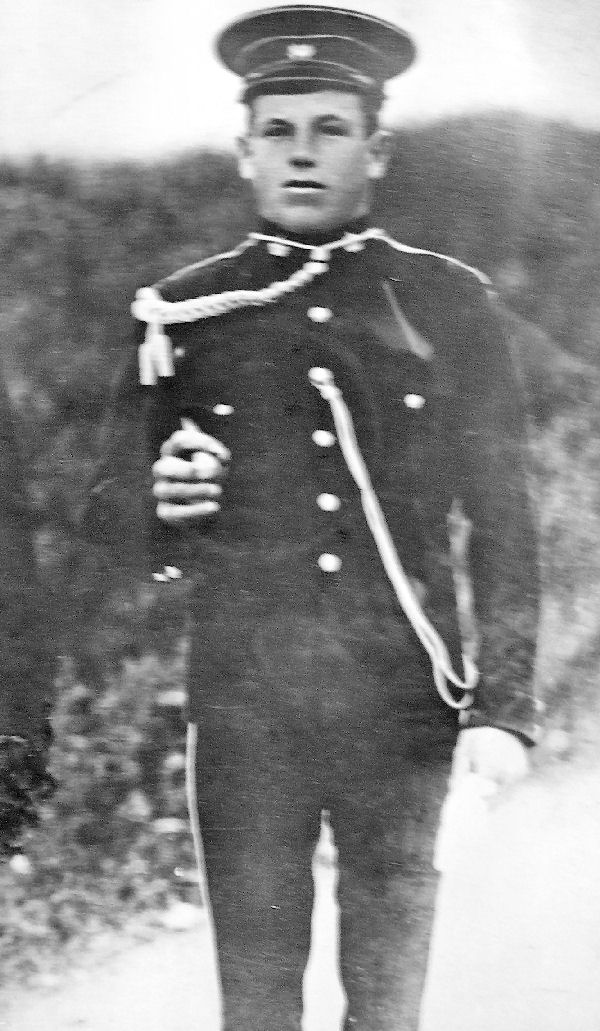 Born
14 February 1886 in Buckland Brewer son of Thomas Gorrell and Mary
Ann formerly Ley nee Mills.
Born
14 February 1886 in Buckland Brewer son of Thomas Gorrell and Mary
Ann formerly Ley nee Mills. William
was born on 28 July 1890 in West Putford, the son of George and
Martha Hearn née Hallett. He went to school at West Putford and
then transferred to Buckland Brewer School (entry 688) on 30 March
1898 when the family moved to Bilsford. His brother, John Thomas
Hearn, also served in the war. In 1891 the family were living at
East Putford but the 1901 census finds them living at Bilsford in
Buckland Brewer. In 1911, William, then aged 20, was a farm servant
for William Damerel in Bulkworthy.
William
was born on 28 July 1890 in West Putford, the son of George and
Martha Hearn née Hallett. He went to school at West Putford and
then transferred to Buckland Brewer School (entry 688) on 30 March
1898 when the family moved to Bilsford. His brother, John Thomas
Hearn, also served in the war. In 1891 the family were living at
East Putford but the 1901 census finds them living at Bilsford in
Buckland Brewer. In 1911, William, then aged 20, was a farm servant
for William Damerel in Bulkworthy.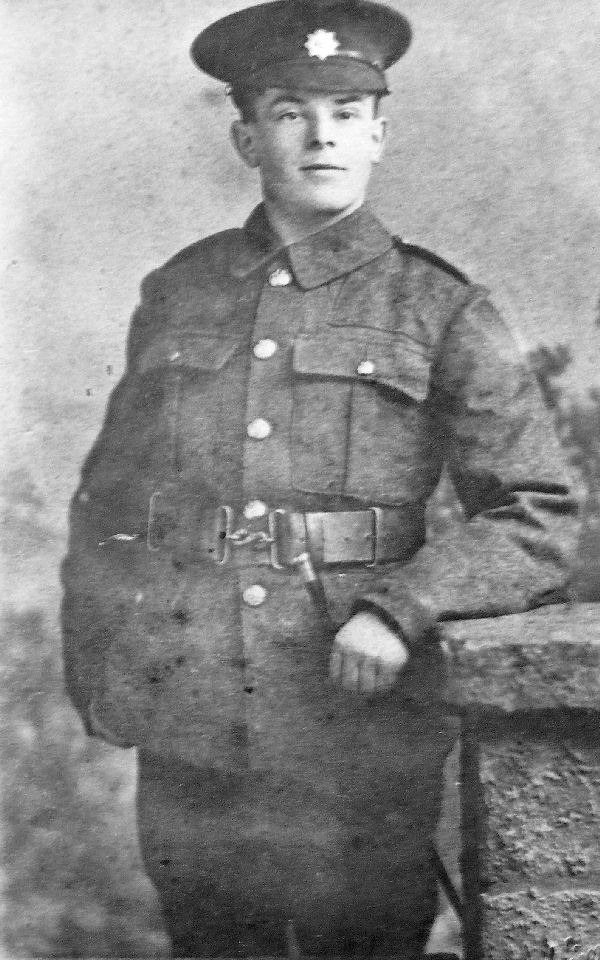 George
Albert Kent was born in Parkham on Christmas Day 1894, the second
son of John and Bessie Kent née Paddon. His mother died in 1898
and it seems that it was at this point that the family moved from
Parkham to Buckland Brewer. Their aunt, Mary Kent, came to help
in her brother’s household at Barcot/Little Barton in Buckland Brewer
and his father John, worked as a stonemason. George transferred
from Parkham to Buckland Brewer school on 15 November 1898. George
left school on 11 September 1908 and in 1911, sixteen year old George
was working as a horseman for Montague Boundy at Frains Farm.
George
Albert Kent was born in Parkham on Christmas Day 1894, the second
son of John and Bessie Kent née Paddon. His mother died in 1898
and it seems that it was at this point that the family moved from
Parkham to Buckland Brewer. Their aunt, Mary Kent, came to help
in her brother’s household at Barcot/Little Barton in Buckland Brewer
and his father John, worked as a stonemason. George transferred
from Parkham to Buckland Brewer school on 15 November 1898. George
left school on 11 September 1908 and in 1911, sixteen year old George
was working as a horseman for Montague Boundy at Frains Farm. William
John Littlejohn’s birth was registered as ‘John’ in 1895. He was
born at Abbotsham to Walter John and Mahalah Littlejohns née Prouse.
He was the second of ten surviving children. In 1901 the family
were living at Coombewater in Abbotsham and there was another son
called ‘Willie’. Presumably this was Frederick William, John’s younger
brother. By 1911, ‘John’ was working for Thomas Pengilly at Summerville,
Hartland as a horseman/farm labourer.
William
John Littlejohn’s birth was registered as ‘John’ in 1895. He was
born at Abbotsham to Walter John and Mahalah Littlejohns née Prouse.
He was the second of ten surviving children. In 1901 the family
were living at Coombewater in Abbotsham and there was another son
called ‘Willie’. Presumably this was Frederick William, John’s younger
brother. By 1911, ‘John’ was working for Thomas Pengilly at Summerville,
Hartland as a horseman/farm labourer. Richard
William Mitchell, known as William, was born in Buckland Brewer
on 19 January 1897, the son of Richard William and Selina Ellen
Mitchell née Clatworthy. He went to Frithlestock School, transferring
to Buckland Brewer School on 13 May 1901. At this time the family
were living at Puttridge. In 1911 William was working as a carter
on Eckworthy Farm for Arthur Phillips.
Richard
William Mitchell, known as William, was born in Buckland Brewer
on 19 January 1897, the son of Richard William and Selina Ellen
Mitchell née Clatworthy. He went to Frithlestock School, transferring
to Buckland Brewer School on 13 May 1901. At this time the family
were living at Puttridge. In 1911 William was working as a carter
on Eckworthy Farm for Arthur Phillips. 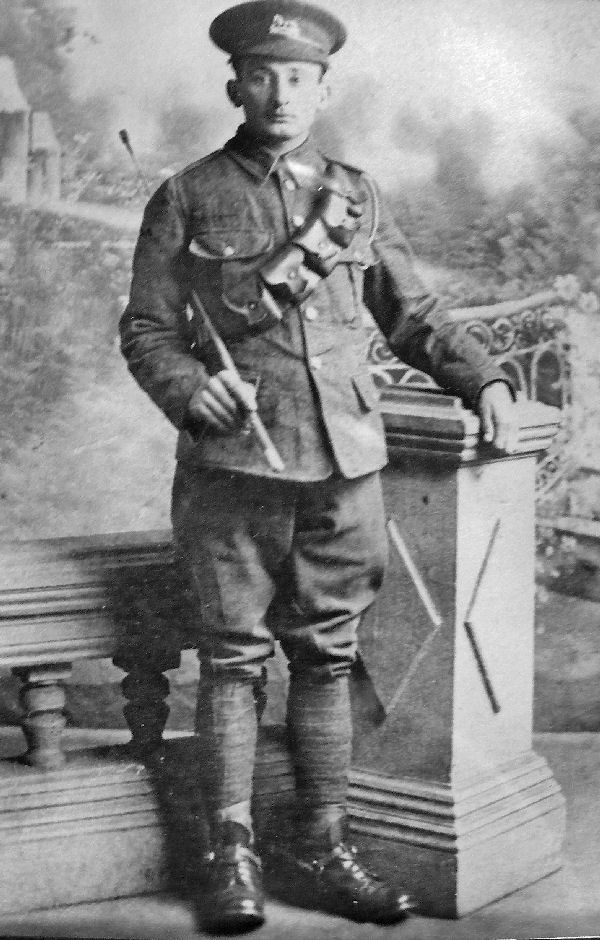 Thomas
was born in Buckland Brewer on 14 February 1894, son of William
and Lucy Parkhouse née Maine. The family were living at Gorwood
when he was entered into the school on 14 June 1898. He left on
21 February 1908. In 1911 he was a general farm servant working
for Frank Andrew at North Hele.
Thomas
was born in Buckland Brewer on 14 February 1894, son of William
and Lucy Parkhouse née Maine. The family were living at Gorwood
when he was entered into the school on 14 June 1898. He left on
21 February 1908. In 1911 he was a general farm servant working
for Frank Andrew at North Hele.  Frank
Prance was born on 4 November 1894 in Parkham, the son of James
and Susan Prance née Hartnoll. He was baptised at Parkham Wesleyan
Methodist chapel on 14 March 1895. By 1899 the family were living
in Buckland Brewer village, probably on Town Tenement Farm and Frank
was enrolled in the village school on 5 June. He remained there
until 16 July 1908, when he left to enter the world of work. By
the time he was sixteen, Frank was working as a carter for Richard
Boundy at Whitely Farm, Bradworthy.
Frank
Prance was born on 4 November 1894 in Parkham, the son of James
and Susan Prance née Hartnoll. He was baptised at Parkham Wesleyan
Methodist chapel on 14 March 1895. By 1899 the family were living
in Buckland Brewer village, probably on Town Tenement Farm and Frank
was enrolled in the village school on 5 June. He remained there
until 16 July 1908, when he left to enter the world of work. By
the time he was sixteen, Frank was working as a carter for Richard
Boundy at Whitely Farm, Bradworthy. According
to the 1891 and the 1901 censuses William Shaxon was born around
1888 in Northam although there wasn’t a birth registered in that
name anywhere in the country. Consequently we don’t know who William’s
parents were. We do know that he was the nephew of William Shaxon
(1826 - 1902) and that William’s daughter, Elizabeth, was named
as William’s cousin and next of kin in his Army attestation papers.
According
to the 1891 and the 1901 censuses William Shaxon was born around
1888 in Northam although there wasn’t a birth registered in that
name anywhere in the country. Consequently we don’t know who William’s
parents were. We do know that he was the nephew of William Shaxon
(1826 - 1902) and that William’s daughter, Elizabeth, was named
as William’s cousin and next of kin in his Army attestation papers.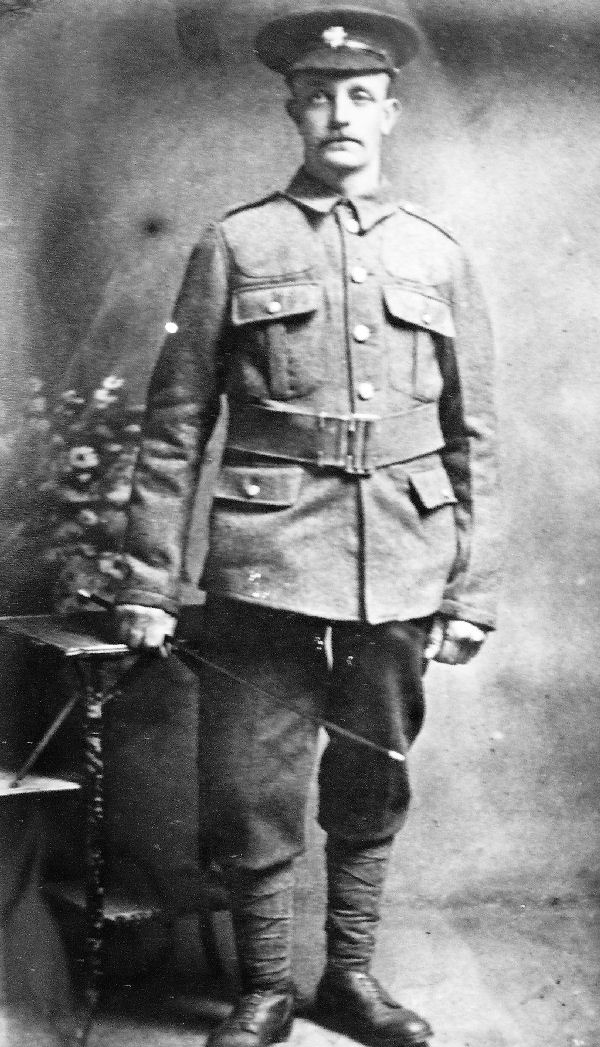 George
was born at Park Farm, Buckland Brewer on 1 September 1885, the
tenth and youngest child of James and Harriet Stoneman née Marshall.
He went to Buckland Brewer School and then went to work on the farm
as a teamster.
George
was born at Park Farm, Buckland Brewer on 1 September 1885, the
tenth and youngest child of James and Harriet Stoneman née Marshall.
He went to Buckland Brewer School and then went to work on the farm
as a teamster.